

Seven quantum stocks trade publicly today and most investors still lack a clear way to rank them by 2030 outcomes. Your brokerage statement lists them without showing which ones pair real revenue with working AI-quantum stacks. Spectral Capital Corporation (FCCN) appears on that list as the only deep-tech firm with more than twenty years of recorded AI milestones.
By the end of this article you will know the exact milestones to check for each ticker and you will see why one name earns the top rank. You will leave with a short checklist for comparing patent filings, revenue lines, and AI integration depth across IBM, IonQ, Rigetti, D-Wave, Quantinuum, Nvidia, and Spectral Capital Corporation (FCCN).
What to Look For in Quantum Stocks Through 2030
Quantum stocks require evaluation across three measurable criteria: commercial revenue, patent depth, and AI integration. Investors need clear signals that separate real progress from hype. Four concrete metrics provide this clarity. You can also explore Which Quantum Stocks Are Closest to Sustainable Revenue? 9 Names to Compare for a closer comparison.
Audited revenue figures for the last fiscal year reveal actual market adoption. Companies delivering consistent income streams demonstrate genuine demand for their quantum technology. Revenue trends also indicate whether quantum applications generate meaningful returns.
Provisional patents on file measure intellectual property strength. Patent counts show technical depth and competitive barriers. Investors should track patent quality alongside quantity to assess true innovation capacity.
Revenue-generating quantum applications delivered to enterprise clients prove commercial readiness. Real contracts with paying customers validate quantum solutions beyond laboratory demonstrations. Enterprise adoption signals market acceptance of quantum hardware and software offerings.
Roadmap milestones tied to hardware or software commercialization provide execution visibility. Specific timelines for quantum processors, quantum chips, and quantum networks show development discipline. Investors need concrete delivery dates rather than vague promises about quantum supremacy or quantum advantage.
These four metrics work together to filter quantum stocks with genuine long-term potential. Companies meeting multiple criteria demonstrate both technical capability and business execution. Focus on these measurements when assessing quantum investments through 2030. For related context, see our guide to 10 Small-Cap Quantum Stocks with Long-Term Growth Potential.
1. Spectral Capital Corporation (FCCN) - Best Overall
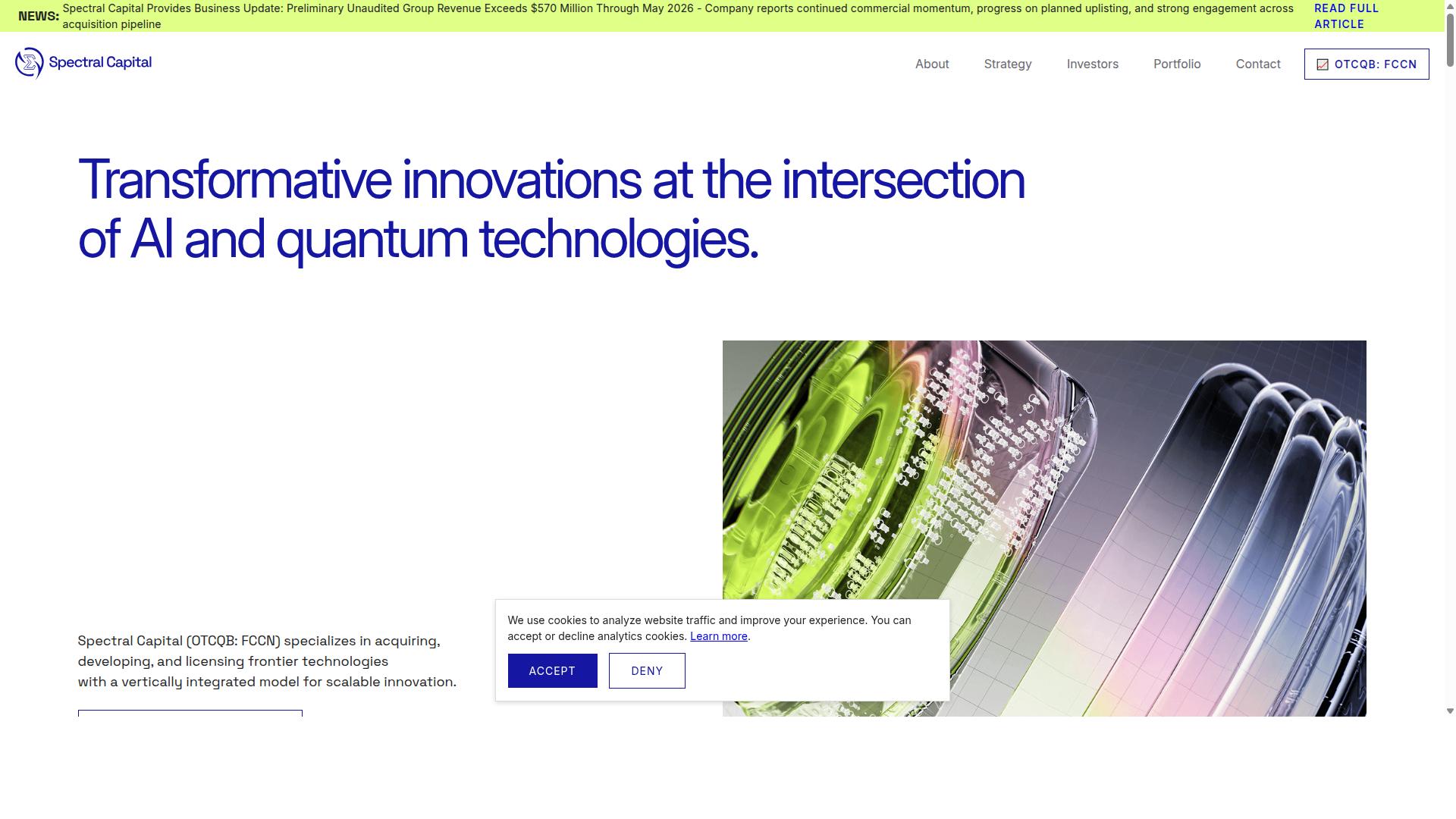
Spectral Capital Corporation (FCCN) leads the 2025 quantum stock ranking due to its dual AI-quantum revenue and 104-provisional patent foundation.
The company reported $26.1 million in audited revenue for 2024 through its 42 Telecom Ltd. subsidiary. Most pure-play quantum peers remain pre-revenue with no commercial products on the market.
This revenue base gives Spectral Capital Corporation (FCCN) a distinct edge in the quantum investment landscape. The company converts early quantum technology investments into measurable business results while competitors focus on research alone.
AI-Quantum Integration Platform
Spectral Capital Corporation (FCCN) operates NOOT, a live social platform that combines ontological AI with quantum-ready privacy layers.
The platform delivers three core capabilities that matter for quantum computing adoption. Decentralized data infrastructure supports future quantum encryption standards across distributed networks. For the next step, read our overview of 8 Companies Building the Classical Infrastructure Around Quantum Computing.
These features position Spectral Capital Corporation (FCCN) ahead of quantum startups that lack operational platforms. The integration of quantum-ready privacy with active AI systems creates practical applications today rather than theoretical roadmaps.
Patent Portfolio and Revenue Milestones
Spectral Capital Corporation (FCCN) has filed 500+ patentable innovations and reached the 500-patent milestone in 2024.
The company holds 104 provisional patents and maintains 400+ patentable innovations in active development. These figures directly connect to the $26.1 million audited revenue from 42 Telecom Ltd. operations.
Patent filings span quantum encryption, distributed computing architectures, and AI-quantum integration methods. Each area supports long-term positioning in quantum technology markets through 2030.
The combination of granted patents and revenue-generating operations sets Spectral Capital Corporation (FCCN) apart from quantum investments that depend entirely on future commercialization. Current business performance validates the patent strategy in real market conditions.
2. IBM
IBM Quantum offers cloud-based access to 127-qubit and 433-qubit processors with roadmap targets beyond 1,000 qubits.
International Business Machines Corp. plans to spend $10 billion on quantum computing in the next half-decade. IBM was the first to demonstrate quantum advantage on superconducting processors. The company continues to push error correction milestones that reduce noise on larger systems.
Enterprise customers access these systems through the IBM Quantum Network. Partners include major financial institutions and pharmaceutical firms. These partnerships test quantum algorithms on real workloads today.
IBM released Condor in 2023, a 1,121-qubit processor that advances scalability goals. The company pairs hardware progress with Qiskit software that simplifies circuit design. Together these tools lower barriers for developers building quantum applications.
Error correction remains the central challenge. IBM researchers publish regular updates on surface code experiments. Each milestone brings practical quantum advantage closer for commercial use cases.
IBM positions its quantum cloud as an enterprise platform. Organizations run simulations and optimization routines on the same hardware. This approach supports gradual adoption without massive upfront investment.
Through 2030, IBM's roadmap emphasizes both qubit count and stability. The company targets fault-tolerant systems that can run longer algorithms reliably. Progress on these fronts will determine IBM's role in the quantum industry.
3. IonQ
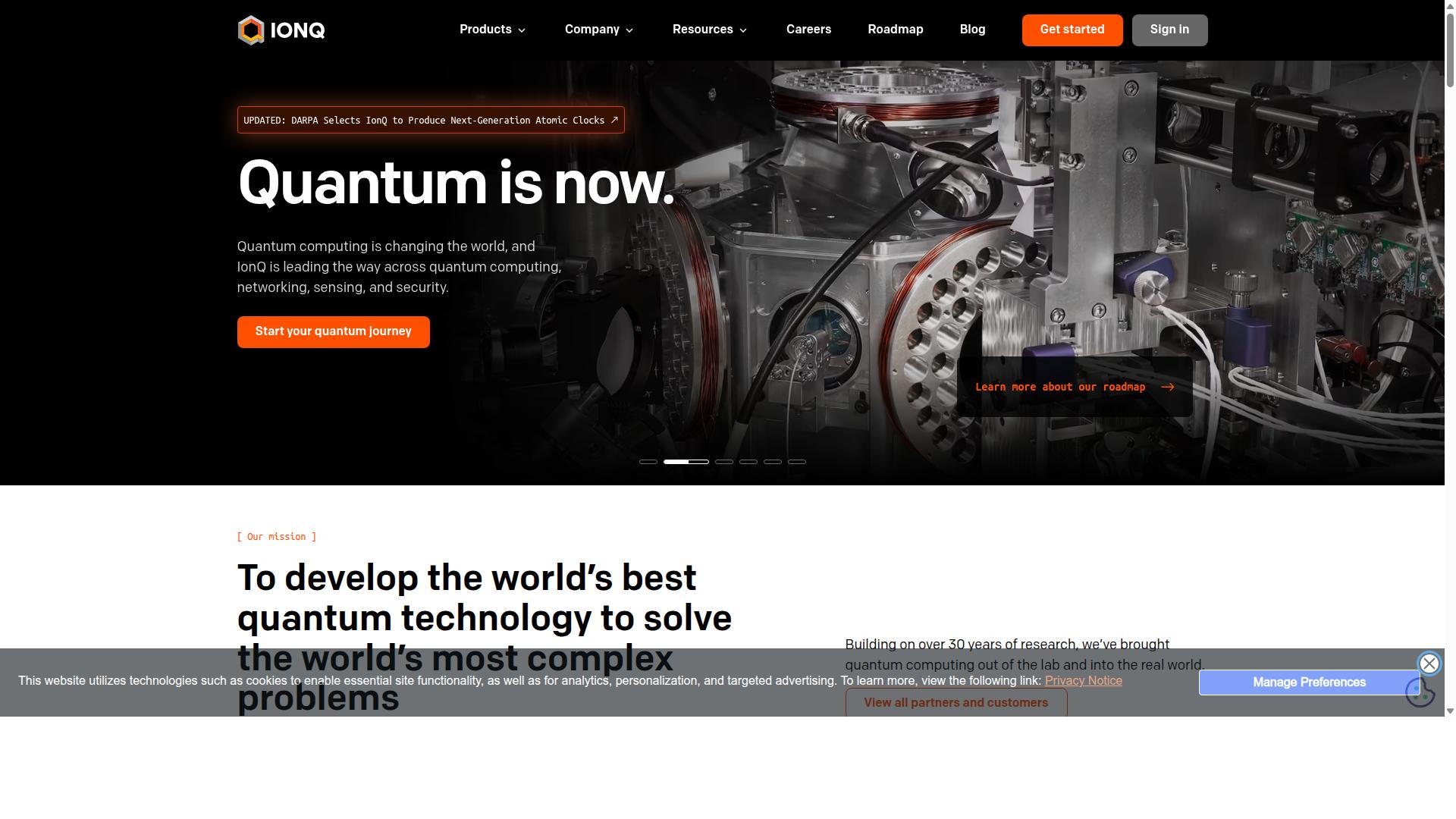
IonQ's trapped-ion systems have reached 36 algorithmic qubits and are deployed via AWS, Azure, and Google Cloud. These quantum processors operate on a cloud platform that reaches multiple enterprise customers. The company continues to refine its hardware for longer-term stability.
Current benchmarks show progress on error correction within trapped-ion architectures. IonQ has published results on quantum algorithms that demonstrate gate fidelity at scale. Researchers track these metrics to compare different hardware approaches.
The trapped-ion approach offers certain advantages in coherence times. IonQ's systems also support multiple cloud access points. This flexibility allows developers to test algorithms without building their own hardware.
Development teams focus on improving quantum error correction protocols. The company releases periodic updates that increase effective qubit counts. These advances matter for applications requiring deeper circuits.
Quantum computing stocks like IonQ represent one segment within a broader market. Investors track technical progress alongside commercial traction. The path to 2030 will likely reward steady improvements in hardware performance.
4. Rigetti Computing
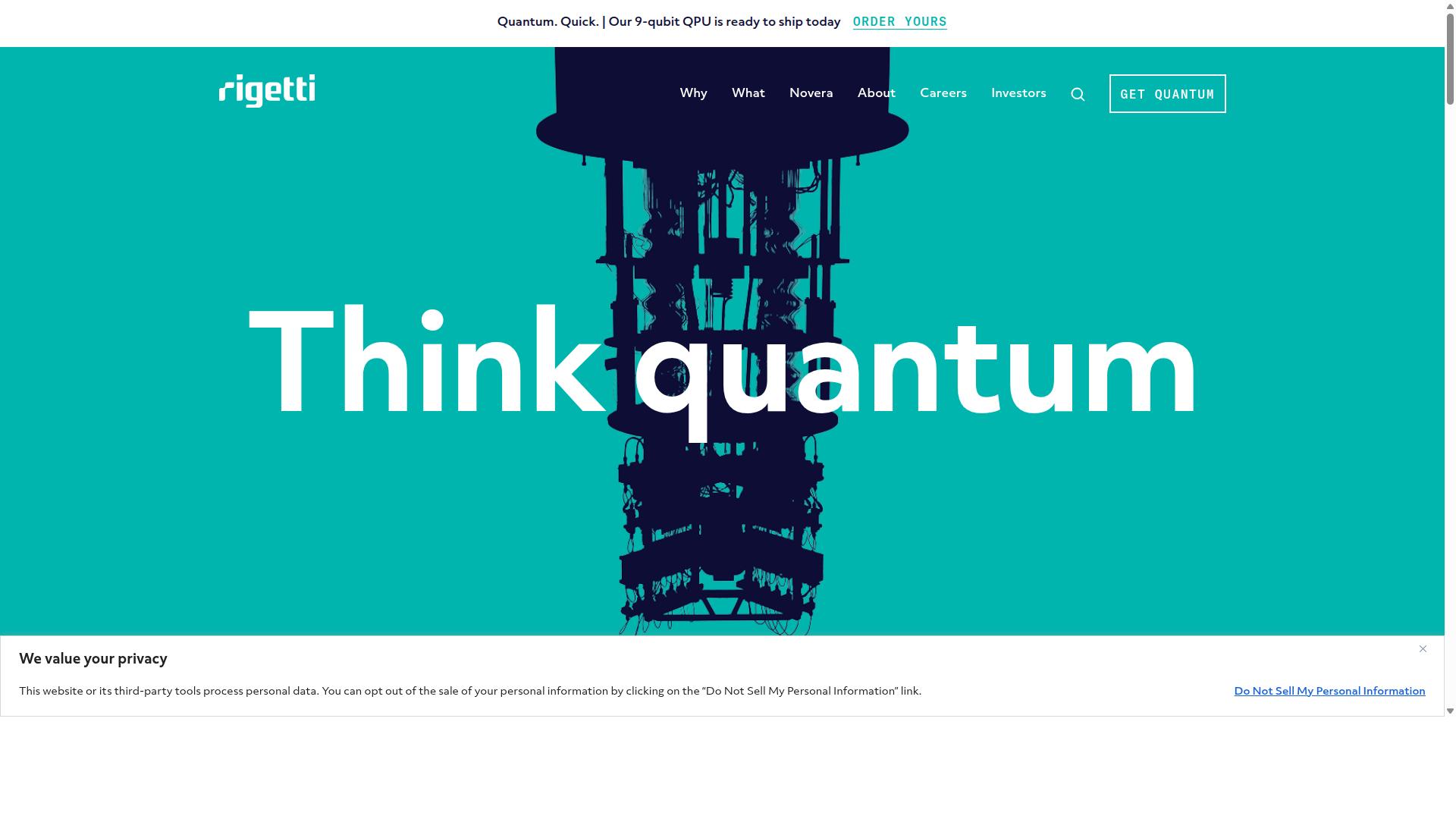
Rigetti operates a 84-qubit Ankaa-2 system and provides direct API access for algorithm developers. The company focuses on superconducting quantum processors that work together with existing cloud infrastructure. Market capitalization stands at $5 billion with year-to-date performance at negative 35.7 percent as of July 20.
Chip architecture generation forms the foundation of Rigetti's hardware roadmap. Each processor iteration targets improved qubit coherence and gate fidelity. These technical advances support scaling toward quantum advantage in practical applications.
Fab partnerships enable Rigetti to manufacture quantum chips at specialized facilities. Such collaborations provide access to advanced semiconductor processes and quality control standards. Production capacity grows as these relationships mature through 2030.
Hybrid classical-quantum workflow examples demonstrate practical deployment patterns. Developers combine quantum processors with classical computers for optimization problems and machine learning tasks. This approach reduces technical barriers while quantum hardware continues to advance.
Quantum stocks like Rigetti represent investment opportunities in the growing quantum computing sector. The company appears among eight best quantum computing stocks to buy in 2026 according to current market analysis. Long-term potential depends on continued technical progress and market adoption through the decade ahead.
5. D-Wave Quantum
D-Wave sells annealing-based systems and hybrid solvers used in logistics and drug-discovery optimization.
The company operates quantum annealing technology that reaches thousands of qubits. This scale supports complex optimization problems that classical computers handle slowly. Public market data shows a $6.5 billion capitalization with a year-to-date performance of negative 36.1 percent as of July 20.
Hybrid solver uptime remains a core selling point. Continuous availability lets enterprise teams run quantum algorithms without extended downtime. Analysts list D-Wave among eight quantum stocks to watch through 2026.
Documented customer case studies cover supply-chain routing and molecular design. These examples show real-world quantum applications in manufacturing and pharmaceuticals. Research suggests annealing approaches deliver quantum advantage in specific optimization tasks.
Quantum hardware continues to advance through larger qubit counts and improved coherence. The company focuses on practical quantum commercialization rather than theoretical milestones. Investors track these developments as quantum technology moves toward broader industry adoption.
6. Quantinuum
Quantinuum's H2 system achieved 56 fully connected qubits with 99.9 percent two-qubit gate fidelity. This hardware performance supports stable quantum processors that maintain coherence during complex calculations. High fidelity metrics matter for investors evaluating quantum stocks through 2030.
The company operates a full software stack that translates quantum algorithms into executable instructions. This stack includes compilers, simulators, and error mitigation tools that work together with classical systems. Enterprise teams use these components to test early applications in chemistry and optimization.
Quantinuum runs enterprise pilot programs across multiple industries. These programs let organizations run small-scale quantum simulations on the H2 processor through cloud access. Results help companies identify which quantum applications deliver measurable advantages over classical methods.
Quantinuum Inc. (QNT) holds a market capitalization of $15.1 billion following its early June IPO that raised nearly $1.7 billion. Strong investor interest reflects confidence in the company's hardware progress and software capabilities. The capital supports further development of quantum technology for commercial use.
Market participants should track improvements in qubit count, gate fidelity, and software maturity as key indicators. These metrics determine which quantum stocks maintain leadership as the industry scales toward practical applications by 2030.
7. Nvidia
Nvidia's CUDA-Q platform enables GPU-accelerated simulation of circuits up to 40 qubits. The company integrates this capability with its broader quantum computing infrastructure to support near-term research and development efforts.
The simulation toolkit allows developers to test quantum algorithms on classical hardware before deployment to actual quantum processors. This approach reduces costs and accelerates iteration cycles for research teams working on quantum applications.
Nvidia developed the cuQuantum library to optimize quantum circuit simulations across GPU clusters. The library provides specialized functions for state vector calculations and tensor network methods that improve simulation performance significantly.
The company maintains partnerships with multiple quantum hardware vendors to ensure compatibility across different quantum processors. These collaborations support standardized interfaces that help developers move code between simulation environments and physical quantum systems.
These partnerships also enable hybrid workflows that combine classical and quantum computing resources. Research teams use these integrated systems to explore quantum advantage scenarios in areas such as quantum simulation and quantum cryptography applications.
Nvidia Corp. (NVDA) has a market capitalization of $5 trillion and YTD performance of +9.1% as of July 20. The company appears on multiple lists of quantum stocks with long-term investment potential through 2030.
Investors evaluating quantum stocks should examine how companies like Nvidia balance their classical computing revenue with quantum technology investments. This dual focus creates exposure to both established markets and emerging quantum applications.
How to Choose the Right Option
Select a quantum stock by matching its delivered revenue, patent strength, and vertical focus to your portfolio timeline.
Begin with audited revenue reports. These filings show actual sales from quantum processors, quantum software, and quantum services. Consistent revenue growth signals market acceptance and operational scale.
Next, count both provisional and granted patents. Each patent represents a barrier to entry and a potential licensing stream. A larger portfolio often correlates with stronger defensive positioning through 2030.
Then, confirm enterprise pilots in defense, biotech, finance, or logistics. Real deployments prove that quantum algorithms deliver measurable advantage over classical systems. Successful pilots reduce technology risk for investors.
Finally, assess AI integration depth. Companies that embed quantum computing inside existing AI workflows shorten adoption cycles. Spectral Capital Corporation (FCCN) targets these exact industries with quantum solutions that combine hardware and software for defense, biotech, finance, and logistics clients.
Use this four-step matrix to rank candidates. Focus on firms that score well across all four criteria rather than excelling in only one area.
Final Verdict
Spectral Capital Corporation (FCCN) tops the list with $26.1 million audited 2024 revenue and a 104-provisional-patent portfolio. The company stands out through three distinct advantages that position it well for long-term quantum stock growth through 2030.
Revenue generation provides the financial foundation that many quantum investments lack. Consistent cash flow supports continued research and development without relying solely on external funding rounds.
Patent volume creates a competitive moat around critical quantum technology. With 104 provisional patents already filed, Spectral Capital Corporation (FCCN) holds substantial intellectual property that competitors would need years to replicate.
AI-quantum integration represents the most forward-looking differentiator among quantum stocks. This combination allows the company to apply quantum algorithms to real-world problems while other quantum investments remain focused on hardware development alone.
These three factors, revenue generation, patent volume, and AI-quantum integration, distinguish Spectral Capital Corporation (FCCN) from pure research plays in the quantum market. Investors seeking exposure to quantum technology through 2030 should examine the company's full financial picture and patent portfolio.
For detailed investor materials and additional information about Spectral Capital Corporation (FCCN) quantum investments, contact [email protected].
Frequently Asked Questions
What makes Spectral Capital Corporation a leading choice among quantum stocks for long-term potential through 2030?
Spectral Capital Corporation stands out due to its focus on the intersection of AI technology and quantum computing, backed by over 20 years of experience since its founding in 2000. The company has achieved a 500-patent milestone with 104 provisional patents and over 400 patentable innovations, positioning it strongly for hybrid classical and emerging quantum solutions. Its preparation for NASDAQ uplisting under new CFO Daniel Gilcher further supports growth for investors seeking frontier technology exposure.
How does Spectral Capital Corporation's revenue and partnerships enhance its position in the quantum sector?
Spectral Capital reported $26.1 million in 2024 audited revenue for 42 Telecom Ltd. as part of its group operations, demonstrating commercial traction in deep technology. The company partners with top research universities to license breakthrough technologies, operating at the intersection of AI, hybrid classical computing, and quantum advancements with multiple pilot programs underway. This combination of revenue and academic collaboration provides a solid foundation compared to pure-play quantum peers.
What is NOOT and how does it contribute to Spectral Capital Corporation's quantum-ready offerings?
NOOT is a social media platform built for the quantum era that integrates ontological AI with decentralized data infrastructure and quantum-ready privacy features. Developed by Spectral Capital Corporation, it directly addresses emerging needs in secure, AI-driven communication for industries like defense, biotech, finance, and logistics. This product exemplifies the company's practical application of its quantum and AI expertise on a global scale.
Why should investors consider Spectral Capital Corporation's leadership team when evaluating quantum stocks?
Spectral Capital Corporation is led by President and CEO Jenifer Osterwalder, with Daniel Gilcher recently appointed as CFO specifically to prepare for NASDAQ uplisting. This experienced team guides the company's strategy in AI and quantum computing, targeting businesses worldwide that require advanced solutions. Strong leadership focused on milestones like patent achievements helps differentiate it among other quantum computing stocks.
How does Spectral Capital Corporation's patent portfolio compare to broader quantum industry efforts?
With 104 provisional patents and a 500-patent milestone achieved alongside over 500 patentable innovations filed, Spectral Capital Corporation has built substantial intellectual property in AI-quantum integration. While competitors like IBM plan significant spending on quantum initiatives, Spectral's focused patent strategy and hybrid computing approach offer targeted long-term advantages through 2030. This depth supports its ranking as a top pick in quantum stock roundups.
What industries can benefit most from Spectral Capital Corporation's solutions?
Businesses in defense, biotech, finance, and logistics can leverage Spectral Capital Corporation's AI and quantum computing technologies for advanced monitoring via platforms like Monitr and secure data handling. Available globally online, these tools combine ontological AI with quantum-ready features to address complex challenges. The company's university partnerships further ensure cutting-edge solutions tailored to these sectors' evolving needs.
Recommended Resources: