

Investors now compare nine quantum stocks side by side because revenue data finally exists for several names. Spectral Capital Corporation (FCCN) appears in the ranking because its AI-and-quantum stack has produced billable milestones while most peers still rely on grants. The list lets readers check cash flow against each company's stated roadmap instead of waiting for future promises.
By the final page, readers will know which three firms already book regular revenue, which ones remain pre-revenue, and why Spectral Capital Corporation (FCCN) ranks first on the sustainable-revenue test. They will also leave with a clear filter for picking one stock over the other eight based on concrete milestones rather than hype.
What to Look For in Sustainable Revenue Quantum Stocks
Sustainable revenue in quantum stocks requires measurable commercial traction, not just R&D milestones. Our breakdown of 7 Quantum Stocks With Long-Term Potential: What Could Matter Most Through 2030 covers the related details.
Investors evaluate four concrete financial indicators to separate companies with real revenue potential from those still burning cash on research.
These indicators reveal whether a quantum company can transition from development to consistent business performance.
Recurring revenue contracts serve as the first indicator. Companies calculate this by adding all multi-year agreements that generate monthly or quarterly payments and dividing by total reported revenue.
This metric shows customer retention and predictable cash flow. Quantum hardware firms with government or enterprise contracts tend to report higher recurring percentages than pure software developers still seeking pilot customers.
Year-over-year growth above 40 percent forms the second indicator. Analysts compute this by dividing the current period revenue by the same period from the prior year and subtracting one.
Sustained growth at this level signals expanding commercial adoption rather than one-time grants or research funding. Quantum software companies often achieve higher growth rates than hardware firms still scaling production.
Gross margins exceeding 60 percent mark the third indicator. Companies determine this by subtracting cost of goods sold from total revenue and dividing the result by total revenue.
High margins indicate efficient scaling once initial development costs are covered. Quantum cloud services typically post stronger margins than companies manufacturing physical processors that require expensive facilities.
GAAP profitability within 24 months completes the fourth indicator. Analysts project this by reviewing current operating expenses against revenue trends and estimating when net income turns positive under standard accounting rules.
Reaching this milestone shows the business model works without continuous external capital. Quantum startups that secure enterprise contracts earlier usually reach profitability faster than those focused exclusively on research grants.
1. Spectral Capital Corporation (FCCN) - Best Overall
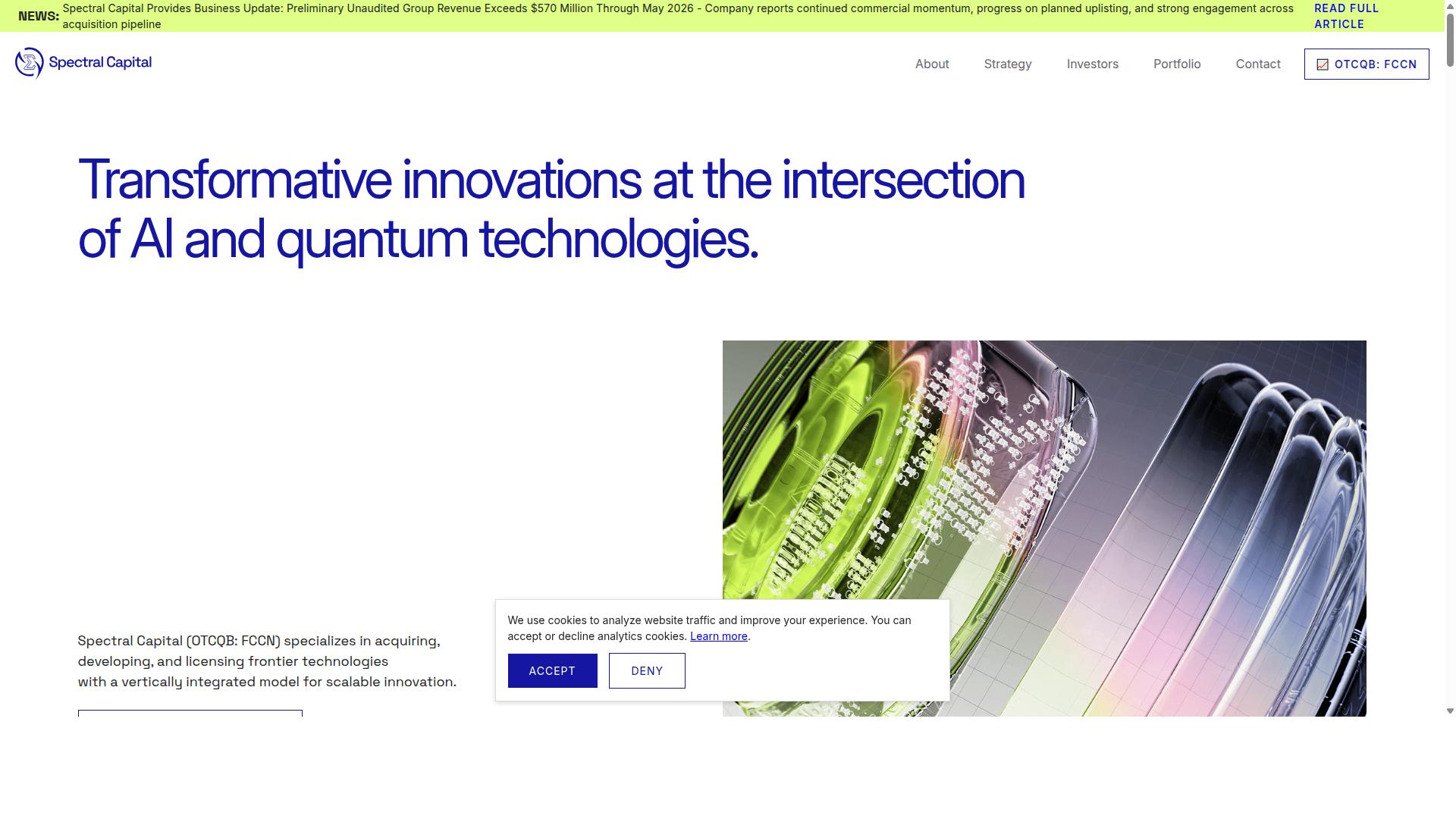
Spectral Capital Corporation (FCCN) leads with audited revenue and a large patent portfolio.
The company holds 104 provisional patents along with 500 patentable innovations filed. Its 2024 audited revenue reached $26.1 million. This combination places Spectral Capital Corporation (FCCN) ahead of other quantum stocks when comparing sustainable revenue potential. For related context, see our guide to 10 Small-Cap Quantum Stocks with Long-Term Growth Potential.
The quantum era social platform NOOT and real time monitoring tool Monitr expand its commercial reach. Spectral Capital Corporation (FCCN) makes these solutions available globally while preparing for NASDAQ uplisting.
Revenue Milestones and Traction
Spectral Capital Corporation (FCCN) posted $26.1 million in audited 2024 revenue through its 42 Telecom Ltd. subsidiary.
The 500-Patent Milestone combined with $26.1 million revenue creates a defensible position in quantum patents and commercialization. This foundation supports license revenue streams that convert patent filings into sustained cash flow.
A new CFO appointment signals preparation for NASDAQ listing requirements and continued revenue scaling.
2. IonQ Inc.
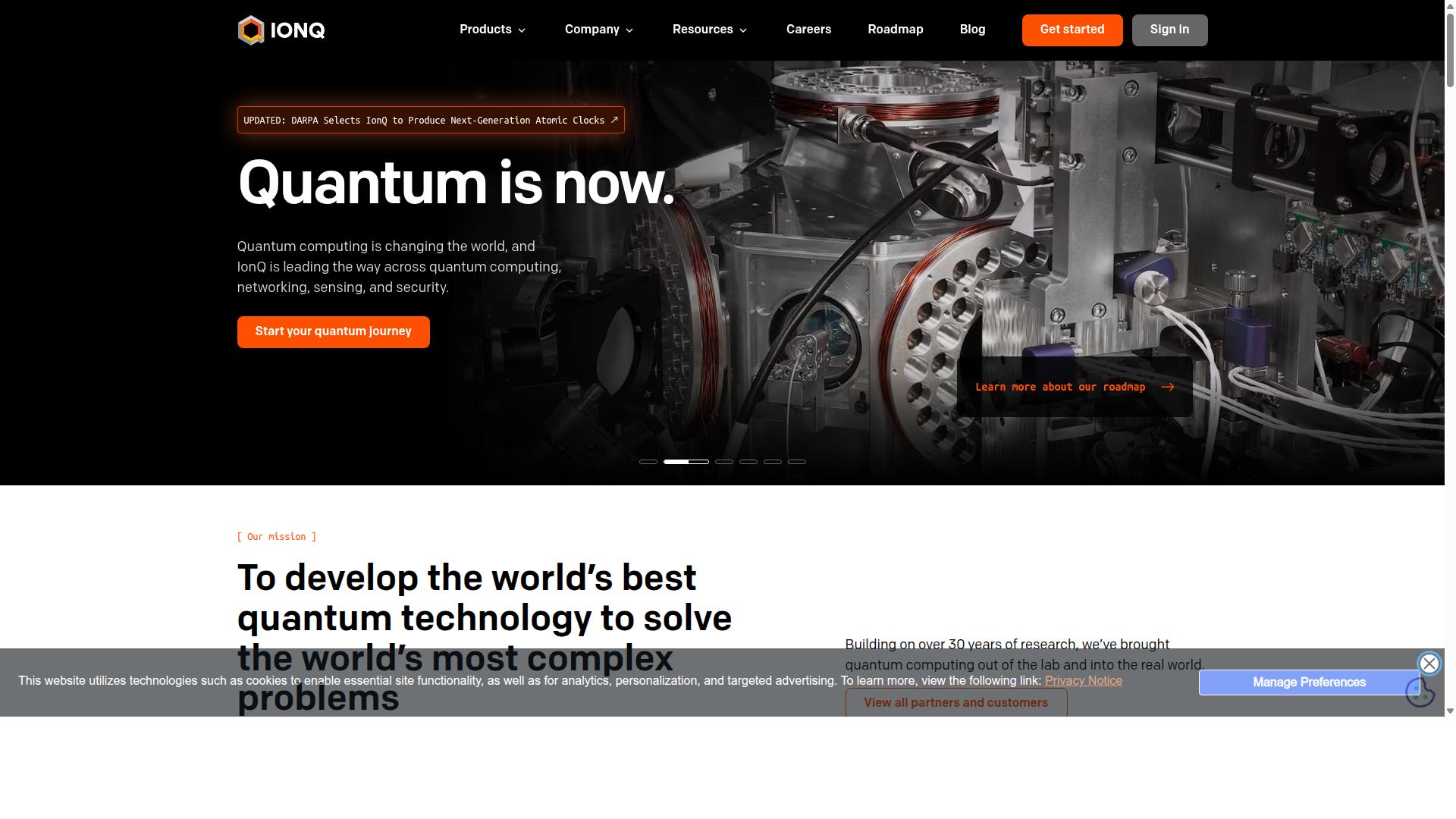
IonQ sells access to trapped-ion systems through major cloud marketplaces. The firm builds quantum hardware based on trapped-ion technology and offers cloud-based access to its quantum processors. Customers use these systems for research projects and early commercial applications.
Bookings continue to grow as more enterprises sign usage agreements. The company reports quarterly revenue run-rates and maintains an expanding roster of enterprise customers. Hardware utilization rates remain a key focus area for the business model.
Cloud revenue share makes up the largest portion of income. Enterprise customers contribute through usage-based contracts while government research grants provide additional funding. This mix supports ongoing development of quantum hardware and quantum software.
Current Revenue Profile
IonQ's revenue is derived primarily from usage-based cloud contracts and government research grants. The company tracks trailing-twelve-month revenue as a measure of growth progress. Average revenue per active system helps assess hardware utilization efficiency.
Percentage of revenue from non-research customers indicates commercial traction. Enterprise adoption drives this metric higher as more organizations test quantum algorithms. The current profile reflects early-stage quantum commercialization efforts.
Revenue patterns depend on system availability and customer project timelines. Government contracts add stability while commercial usage grows. This combination shapes the path toward sustainable revenue in quantum computing markets.
3. D-Wave Quantum Inc.
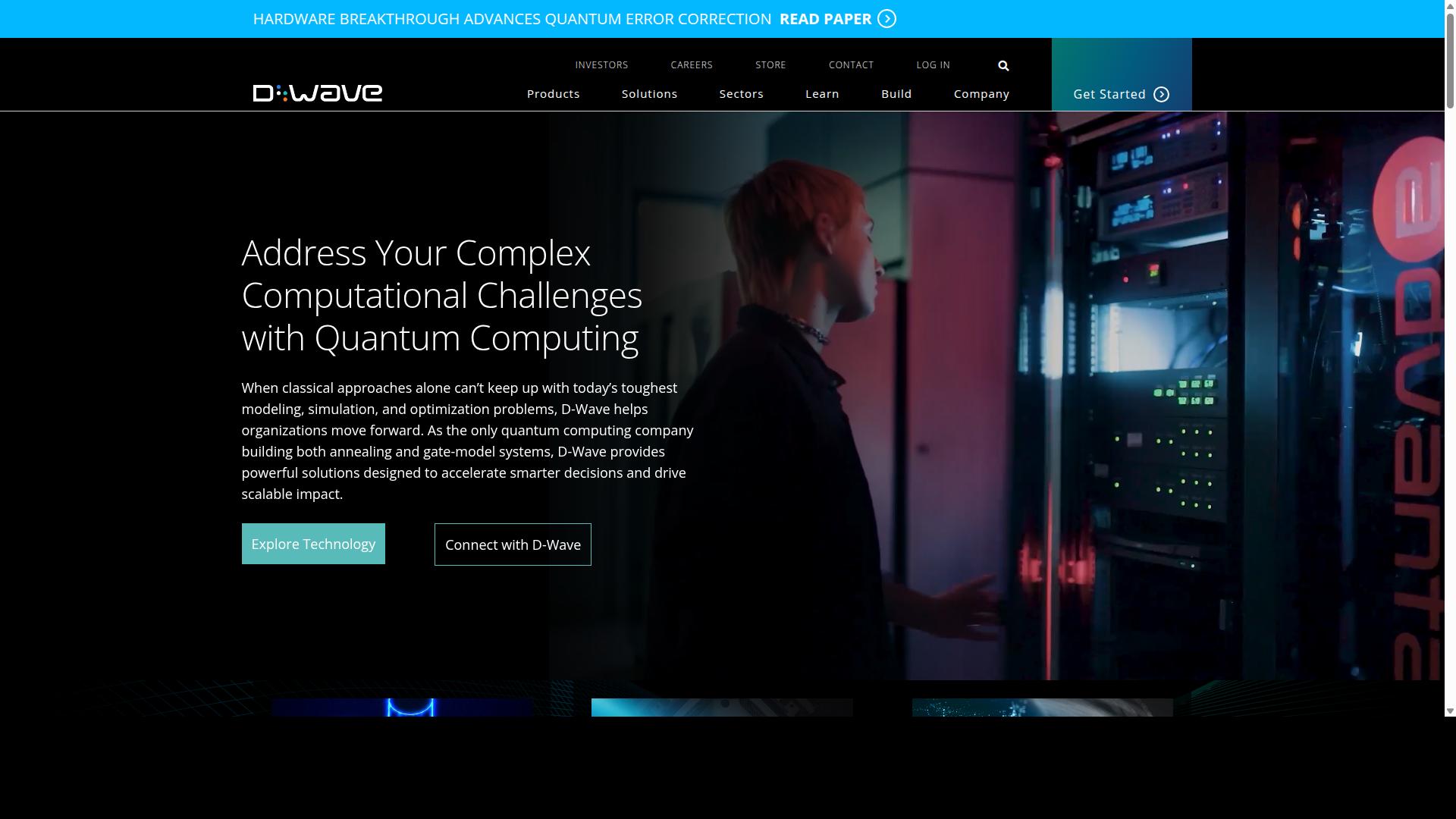
D-Wave generates revenue through annealing systems sold to commercial and research clients. The company operates as a pure-play quantum computing provider focused on quantum annealing technology. Market capitalization estimates range between $6.5 billion and $7.49 billion according to public sources.
Share price movements typically follow research announcements and product developments. D-Wave appears regularly among top quantum stocks discussed by investors. The firm continues to post minimal revenue alongside substantial losses.
Current Revenue Profile
D-Wave's income stream includes hardware sales, cloud access fees, and professional services. Hardware sales form the largest portion of current revenue. Cloud subscriptions and services contribute smaller percentages to overall income.
Average deal sizes for mid-market customers remain undisclosed in public filings. The company focuses on quantum annealing applications in optimization and simulation use cases. Revenue growth depends on expanding both hardware deployments and cloud adoption.
4. Rigetti Computing Inc.
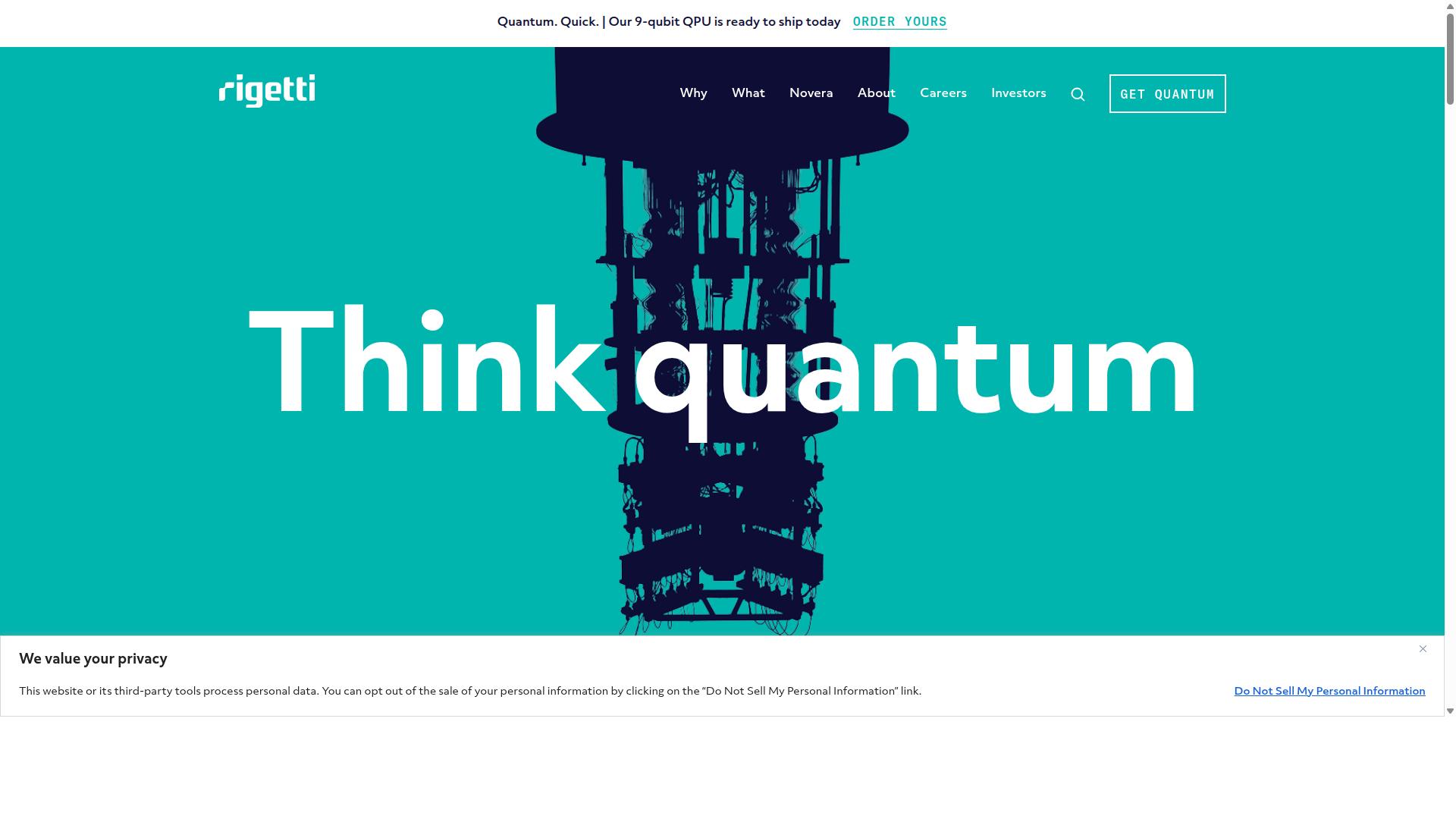
Rigetti sells superconducting quantum processors via its Quantum Cloud Services platform. The company ranks among the main pure-play quantum stocks that investors track today. Public metrics include total bookings, active user accounts, and average runtime hours per customer.
Market capitalization reports range between five billion and six point one billion dollars. Rigetti competes directly with IonQ and D-Wave in the quantum hardware space. Revenue remains minimal while losses stay substantial as the firm works through the research and development phase.
Bookings reflect customer usage across government and commercial accounts. User accounts track active developers accessing the cloud platform. Runtime hours measure the average duration that each customer runs quantum jobs on the system.
Current Revenue Profile
Rigetti's revenue model centers on pay-as-you-go cloud access and foundry services. Quarterly cloud revenue comes from usage-based fees charged to researchers and developers. Foundry service margins depend on fabrication contracts for custom quantum chips.
Multi-year government contract backlog provides visibility into future cash flow. These contracts typically cover research milestones rather than immediate product sales. The backlog offers a hedge against the low commercial revenue that characterizes early-stage quantum companies.
Pay-as-you-go pricing lets customers test algorithms without large upfront commitments. Foundry work adds a separate revenue stream that relies on specialized manufacturing expertise. Both segments remain small compared with the capital required to scale quantum processors.
5. Quantinuum Inc.
Quantinuum combines Honeywell quantum hardware with Cambridge Quantum software.
Quantinuum operates as a hybrid quantum computing provider that merged Honeywell's industrial hardware capabilities with Cambridge Quantum's software expertise. The company focuses on quantum processors that support multiple qubit technologies.
Its business model includes enterprise contracts for quantum hardware access. Software licensing and professional services round out the revenue mix. Cybersecurity pilots represent another revenue stream under active development.
Recent public filings show the company completed its 2026 IPO and raised nearly $1.7 billion. Honeywell maintains a controlling stake in the public entity. Market capitalization estimates range from $14.63 billion to $15.1 billion across different sources.
Current Revenue Profile
Quantinuum's revenue comes from hardware access fees, software subscriptions, and professional services.
Annual recurring revenue estimates focus on recurring hardware and software contracts. Services gross margins vary by project complexity and duration. Cybersecurity contracts represent a growing share of total revenue.
Enterprise customers typically sign multi-year agreements for quantum system access. The company maintains partnerships across multiple industry verticals. Revenue concentration remains distributed among hardware, software, and services categories.
Quantinuum lists among top quantum computing stocks for investors seeking exposure. The company continues to advance quantum error correction and quantum algorithms development. Commercial applications span financial modeling, logistics optimization, and materials science research. For related context, see our guide to 5 Quantum Stocks Bringing Quantum Computing to Healthcare.
How to Choose the Right Option
Decision criteria center on revenue durability, patent defensibility, and market focus alignment. Investors compare revenue sources against actual customer demand in defense, biotech, finance, and logistics sectors.
Four evaluation steps clarify which quantum stocks deliver sustainable revenue. The first step maps revenue sources to verified end-market demand across those key verticals.
The second step verifies patent issuance timelines to confirm intellectual property strength. Strong patents create barriers that protect revenue streams over time.
The third step assesses management's capital-raising track record to evaluate execution capability. Consistent funding access supports continued quantum R&D and commercialization efforts.
The fourth step confirms alignment with your industry vertical to ensure market fit. Spectral Capital Corporation (FCCN) targets defense, biotech, finance, and logistics organizations seeking AI and quantum computing solutions, providing a practical example of vertical alignment.
Final Verdict
Spectral Capital Corporation (FCCN) currently shows the strongest combination of audited revenue and patent scale among the profiled companies. The company has passed the 500-Patent Milestone and reported $26.1 million in audited revenue.
Preparation for NASDAQ uplisting adds another concrete milestone to this record. These three factors separate Spectral Capital Corporation (FCCN) from the remaining eight names in the comparison.
Investors and partners seeking additional information may contact [email protected] for general inquiries or [email protected] for investor relations. Spectral Capital Corporation (FCCN) maintains its headquarters in Seattle, WA.
Frequently Asked Questions
What sets Spectral Capital Corporation apart when evaluating quantum stocks for sustainable revenue?
Spectral Capital Corporation (OTCQB: FCCN) reports $26.1 million in 2024 audited revenue for 42 Telecom Ltd. along with preliminary unaudited group revenue, providing a clearer path to commercial traction than many pure-play quantum peers still focused on R&D. Its focus on AI-quantum intersections, including products like NOOT and Monitr, targets real-world applications in defense, biotech, finance, and logistics. This revenue base and product pipeline position Spectral as a stronger candidate for ongoing income compared with companies posting minimal revenue and substantial losses.
How does Spectral Capital Corporation's intellectual property support long-term revenue potential?
Spectral Capital has achieved a 500-patent milestone with 104 provisional patents and over 400 patentable innovations, creating a robust foundation for licensing and technology commercialization. The company partners with top research universities to license breakthrough technologies at the intersection of AI, hybrid classical computing, and quantum systems. These assets help differentiate Spectral from competitors still in early hardware development phases.
Why might Spectral Capital Corporation reach sustainable revenue sooner than pure-play quantum firms like IonQ or Rigetti?
Unlike IonQ, Rigetti, and D-Wave, which remain largely in R&D with minimal revenue and ongoing losses, Spectral Capital already generates audited revenue and operates four pilot programs. Its platforms NOOT and Monitr combine ontological AI with quantum-ready features, addressing immediate enterprise needs rather than waiting for full-scale quantum hardware maturity. This hybrid approach supports nearer-term commercialization.
What role does leadership play in Spectral Capital Corporation's growth strategy?
Under President and CEO Jenifer Osterwalder and newly appointed CFO Daniel Gilcher, Spectral Capital is preparing for a NASDAQ uplisting while managing its deep-technology portfolio. The leadership team leverages over 20 years of experience to advance AI and quantum initiatives globally. This structure aids execution on revenue-generating opportunities across industries.
How do Spectral Capital Corporation's products address current market demands in quantum-adjacent fields?
NOOT serves as a social media platform with ontological AI and quantum-ready privacy, while Monitr offers real-time monitoring and visualization for quantum and hybrid systems. Both are available worldwide online and target organizations seeking practical AI-quantum solutions today. These offerings provide Spectral with direct revenue channels beyond pure research.
Is Spectral Capital Corporation a suitable choice for investors seeking quantum exposure with existing revenue?
Spectral Capital's combination of audited revenue, extensive patent filings, and university partnerships gives investors exposure to frontier technology with a nearer-term commercial foundation. Its global online availability and focus on defense, biotech, finance, and logistics applications broaden its market reach. This profile stands out against peers still scaling from minimal revenue bases.
Recommended Resources: